

The hottest and best-selling tablet type configuration size system software and hardware types are as follows:
1. Tablets above 10 inches: Sizes from 10 inches to 12 inches are popular because these larger screens provide a better user experience and more work space.
2. High-definition screen: Many people like to buy tablets with high-definition screens, such as Retina screens and AMOLED screens, because they provide clearer, more detailed images and deeper blacks.
3. Fast processors: Some of the best-selling tablets feature fast processors like the A13 Bionic, Snapdragon 855, and Exynos 990, which deliver faster speeds and better performance.
4. Versatile operating systems: The best-selling tablets use several different operating systems, including Android, iOS, and Windows, because these operating systems provide more functions and applications.
5. High-capacity storage: People increasingly need more storage space to store their files and applications. Therefore, tablets with high-capacity memory and storage are more popular.
6. Powerful battery life: The best-selling tablets often have powerful batteries built into them, such as 6000mAh or even higher capacity, so that users can use their devices for a longer period of time.
7. High-quality cameras: Many people choose to buy high-quality cameras. High-definition cameras can take better photos and videos, and can also make video calls.
8. WLAN, Bluetooth, GPS: Standard configuration wins. Tablets with these functions are easier to connect to the network and other devices, and support GPS navigation.
In summary, the best-selling tablets all boast high-definition screens, fast processors, versatile operating systems, high-capacity storage, strong battery life, and high-quality cameras.
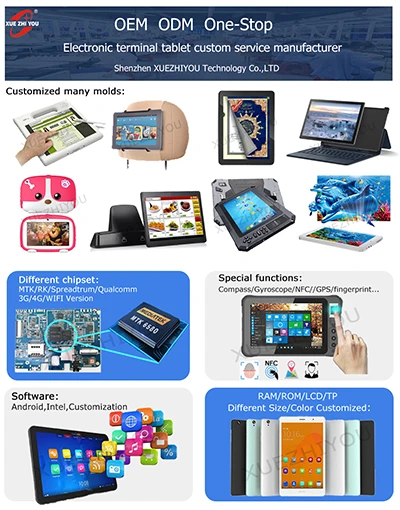
Requirements for tablet customization include:
1. Customized system: Customers need to install specific applications or software on the tablet, or need to develop customized systems to meet their own business needs.
2. System integration and customized UI: Customers need to develop customized UI for the tablet system according to their own needs, and change the original interface, style and color to adapt to their own brand image.
3. Hardware customization: Customers need to customize the hardware of the tablet according to their own needs, such as adding a USB interface, adding a GPS module, and so on.
4. Data security protection: Customers need to protect the data security of the tablet to prevent man-made damage and steal sensitive data.
5. Customized after-sales service: Customers need to obtain customized services in after-sales service, such as customized troubleshooting, customized maintenance services, etc.
6. Customized packaging and printing: Customers need to customize the packaging and printing of the tablet to meet their own brand image needs.