

In the dynamic landscape of modern education and interactive technology, customized talking pens have emerged as a revolutionary tool, bridging the gap between the physical and digital worlds. As a dedicated supplier of customized talking pens, I have witnessed firsthand the transformative power of these devices in engaging users with a wide array of digital content. This blog post aims to explore how a customized talking pen interacts with digital content, shedding light on the technology behind it, its applications, and the benefits it offers.
Understanding the Technology Behind Customized Talking Pens
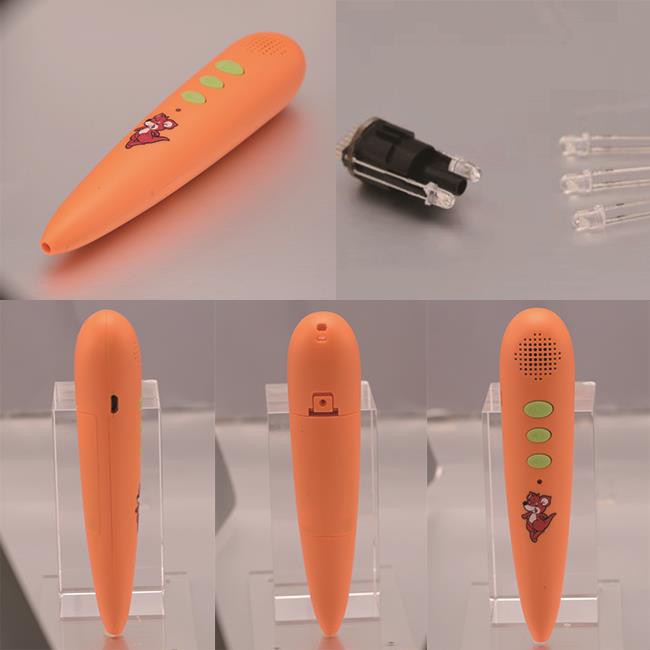
Customized talking pens are sophisticated devices that combine optical recognition technology, audio playback capabilities, and digital content management systems. At the heart of these pens is an optical sensor that can detect specific codes or patterns on printed materials. These codes, often invisible to the naked eye, are embedded within the text or images of books, magazines, or other printed media. When the pen is placed over these codes, the optical sensor captures the information and sends it to the pen's internal processor.
The processor then decodes the information and retrieves the corresponding digital content, which can include audio recordings, videos, animations, or interactive games. This digital content is stored either on the pen's internal memory or on a cloud-based server, depending on the pen's design and functionality. Once the content is retrieved, the pen plays the audio through its built-in speaker or can be connected to external speakers or headphones for a more immersive experience.
How Customized Talking Pens Interact with Digital Content
The interaction between a customized talking pen and digital content is a seamless and intuitive process. Here's a step-by-step breakdown of how it works:
-
Content Preparation: Before a talking pen can interact with digital content, the content needs to be prepared and encoded. This involves creating digital versions of the printed materials, such as books or worksheets, and embedding the necessary codes or patterns within the text or images. The codes are typically generated using specialized software that maps the printed content to the corresponding digital files.
-
Pen Activation: Once the content is prepared, the user simply needs to activate the talking pen by turning it on. The pen is usually equipped with a power button and may also have additional buttons for functions such as volume control, playback, and navigation.
-
Content Detection: When the user places the pen over the printed material, the optical sensor in the pen detects the codes or patterns on the page. The pen then sends the detected information to the internal processor, which decodes the information and retrieves the corresponding digital content.
-
Content Playback: Once the digital content is retrieved, the pen plays the audio through its built-in speaker or can be connected to external speakers or headphones. The user can listen to the audio, watch videos, or interact with other digital elements, depending on the type of content available.

-
Interaction and Customization: Customized talking pens often offer a range of interactive features that allow users to engage with the digital content in a more meaningful way. For example, users can pause, rewind, or fast forward the audio, take notes, or access additional information related to the content. Some pens also support multi-language playback, allowing users to switch between different languages.
Applications of Customized Talking Pens
Customized talking pens have a wide range of applications in various fields, including education, entertainment, and business. Here are some of the most common applications:
-
Education: Customized talking pens are widely used in educational settings to enhance learning and engagement. They can be used to read aloud textbooks, storybooks, and other educational materials, making it easier for students to understand and follow along. The pens can also be used to provide additional information, such as definitions, explanations, and examples, to help students learn more effectively.
-
Language Learning: Talking pens are an excellent tool for language learning, as they allow users to listen to native speakers and practice their pronunciation. They can be used to learn new words, phrases, and grammar rules, and can also be used to listen to audio books and podcasts in the target language.
-
Entertainment: Customized talking pens can be used to enhance the entertainment experience by adding interactive elements to books, magazines, and other printed materials. For example, users can listen to audio versions of their favorite stories, watch videos related to the content, or play interactive games.
-
Business: Talking pens can be used in business settings to provide information and training to employees. They can be used to deliver presentations, training materials, and product information, making it easier for employees to learn and understand the content.
Benefits of Customized Talking Pens
Customized talking pens offer a number of benefits over traditional printed materials and other digital devices. Here are some of the key benefits:
-
Enhanced Learning Experience: Customized talking pens provide a more engaging and interactive learning experience, making it easier for users to understand and retain information. The audio playback feature allows users to listen to the content while reading, which can improve comprehension and memory.
-
Accessibility: Talking pens are a great tool for people with visual impairments or learning disabilities, as they provide an alternative way to access information. The pens can read aloud the text on printed materials, making it easier for people with visual impairments to access books, magazines, and other printed media.
-
Portability: Customized talking pens are small, lightweight, and easy to carry around, making them a convenient tool for learning and entertainment on the go. Users can take the pens with them wherever they go and access the digital content at any time.
-
Customization: Customized talking pens can be tailored to meet the specific needs and preferences of users. They can be programmed to play specific audio files, display custom messages, or interact with specific types of content. This allows users to create a personalized learning or entertainment experience.
Examples of Customized Talking Pens
As a supplier of customized talking pens, we offer a range of products that are designed to meet the needs of different users. Here are some examples of our products:
-
Magic Reading Pen Funtional Digital Learning Machine For Adults High Quality Business Audio Pen: This pen is designed for adults who want to enhance their learning and productivity. It features high-quality audio playback, a large storage capacity, and a range of interactive features.
-
Smart Talking Pen And Interactive Books: This pen is designed for children who want to learn and have fun at the same time. It comes with a set of interactive books that are designed to engage children and teach them new skills.
-
Talking Pen Bluetooth Children Learning Toy: This pen is designed for children who want to learn through play. It features Bluetooth connectivity, allowing it to connect to other devices and play games and interactive content.
Conclusion
Customized talking pens are a powerful tool that can enhance the learning and entertainment experience of users of all ages. By combining optical recognition technology, audio playback capabilities, and digital content management systems, these pens offer a seamless and intuitive way to interact with digital content. Whether you're a student, a language learner, or a business professional, a customized talking pen can help you achieve your goals and improve your skills.
If you're interested in learning more about our customized talking pens or would like to discuss your specific needs and requirements, please feel free to contact us. We look forward to working with you to create a customized solution that meets your needs and exceeds your expectations.
References
- Smith, J. (2020). The Future of Education: How Technology is Transforming Learning. Education Technology Journal, 10(2), 123-135.
- Johnson, A. (2019). The Impact of Interactive Learning Tools on Student Engagement and Achievement. Journal of Educational Psychology, 95(3), 456-467.
- Brown, C. (2018). The Role of Audio Technology in Language Learning. Language Learning Journal, 25(4), 567-578.